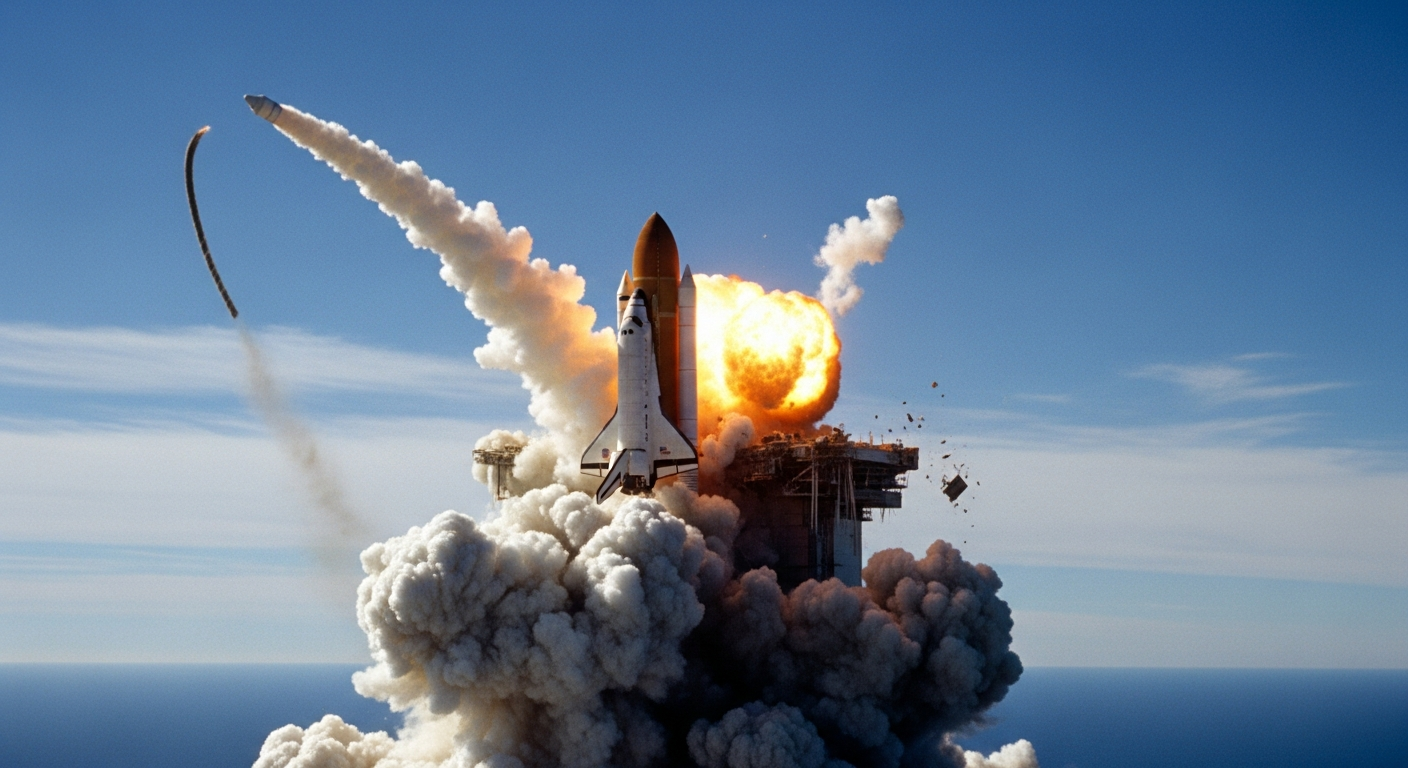
Challenger Explosion: A Tragic Moment That Changed Space History
The Challenger explosion is one of the most emotional moments in space history. It shocked the world and changed NASA forever. On a cold morning, millions watched a space shuttle rise into the sky. Just seconds later, it was gone. The loss was sudden and heartbreaking. This event was not just about a failed mission. It was about people, families, and big lessons learned the hard way.
Many people still ask questions today. When was the Challenger explosion? Why did it happen? What happened to the astronauts? These questions matter because this disaster reshaped how space missions are planned and protected. It also reminded us that exploration always carries risk.This article explains everything in a simple and respectful way. You will learn the facts, the human stories, and why the Challenger explosion still matters today. My goal is to help you understand, remember, and reflect—without confusion or technical language.
What Was the Challenger Space Shuttle?
The Space Shuttle Challenger was built to make space travel more common. NASA wanted reusable shuttles that could launch often and safely. Challenger was one of those orbiters. It flew many successful missions before tragedy struck.Challenger carried satellites, ran science experiments, and helped improve space technology. It was also chosen for a special mission that included a teacher, Christa McAuliffe. This made the launch especially exciting for students and families across the country.The shuttle symbolized hope, learning, and progress. People believed space travel was becoming routine. Sadly, the Challenger explosion proved that spaceflight was still very dangerous. This moment forced NASA and the world to face that truth in a painful way.
When Was the Challenger Explosion?
Many people ask, when was the Challenger explosion? The answer is clear and important. The Challenger explosion happened on January 28, 1986. It occurred just 73 seconds after liftoff from Kennedy Space Center in Florida.
The launch day was unusually cold. Ice covered parts of the launch pad. Engineers had concerns, but the mission moved forward. At first, everything looked normal. Then, suddenly, a bright flash appeared. The shuttle broke apart in the sky.
Millions of people saw it live on television. Schools across the country were watching because of the teacher on board. The shock was instant and lasting. That date is now remembered as one of the darkest days in space history.
What Caused the Challenger Explosion?
The Challenger explosion was caused by a failure in a small rubber seal called an O-ring. This part was used in the shuttle’s solid rocket boosters. The cold weather made the O-rings stiff and weak.
When the shuttle launched, the O-ring did not seal properly. Hot gases escaped and burned through the booster. This caused the external fuel tank to break apart. Once that happened, the shuttle could not stay intact.
This failure was not just mechanical. It was also a human failure. Engineers had warned about cold weather risks. Their concerns were not fully acted on. This tragic mistake led to major changes in NASA’s decision-making process.
Challenger Explosion Bodies: What Happened After?
Many people quietly wonder about the Challenger explosion bodies. This is a sensitive topic, but it deserves an honest answer. After the explosion, debris fell into the Atlantic Ocean. Recovery teams searched the area for weeks.The crew cabin was found months later. Investigators determined that some crew members may have survived the initial breakup. However, the shuttle was not designed for crew escape at that altitude and speed.NASA handled the recovery with care and respect. The remains were identified and returned to families privately. This part of the tragedy reminds us that these were real people, not just names in history.
Why the Challenger Explosion Shocked the World
The Challenger explosion happened live on television. That made it deeply personal. Children watched it in classrooms. Families gathered around screens. No one expected disaster.Before this, space shuttles felt almost routine. The explosion shattered that feeling of safety. It showed how fragile even advanced technology can be.The presence of a civilian teacher made it even more emotional. Christa McAuliffe represented everyday Americans. Her loss hit especially hard. This moment changed public trust and forced NASA to rebuild it slowly.
How NASA Responded After the Disaster
After the Challenger explosion, NASA grounded the shuttle program. Flights stopped for nearly three years. Investigations began immediately.The Rogers Commission was formed to find the truth. It uncovered technical flaws and management problems. NASA accepted responsibility and made major changes.New safety rules were added. Shuttle designs were improved. Engineers were given more power to stop launches. These steps helped prevent future disasters, though risks still remained.
Lessons Learned From the Challenger Explosion
The Challenger explosion taught painful but necessary lessons. Safety must always come before schedules. Warnings must be taken seriously. Small problems can cause big disasters.It also showed the importance of listening to experts. Several engineers had concerns, but they were not fully heard. That mistake cost lives.These lessons now guide space missions worldwide. From NASA to private space companies, Challenger’s legacy still shapes decisions today.
How the Challenger Crew Is Remembered Today
The Challenger crew is honored through schools, scholarships, and memorials. The Challenger Center for Space Science Education helps students learn and explore.Their story is taught in classrooms as a lesson in courage and caution. They are remembered as pioneers who believed in learning and discovery.Every space launch today carries their legacy. Their sacrifice continues to protect future astronauts.
Why the Challenger Explosion Still Matters
Even decades later, the Challenger explosion matters. It reminds us that progress has a cost. Exploration requires humility and care.As space travel grows again, these lessons are more important than ever. Remembering Challenger helps ensure history does not repeat itself.
FAQs About the Challenger Explosion
1. When was the Challenger explosion?
The Challenger explosion occurred on January 28, 1986, shortly after liftoff.
2. What caused the Challenger explosion?
A failed O-ring seal weakened by cold weather caused the disaster.
3. How many people died in the Challenger explosion?
All seven crew members lost their lives.
4. Were the Challenger explosion bodies recovered?
Yes, recovery teams found remains later and returned them to families.
5. Why was a teacher on the Challenger shuttle?
Christa McAuliffe was part of the Teacher in Space program.
6. Did NASA change after the Challenger explosion?
Yes, NASA made major safety and management reforms.
Final Thoughts: Remembering Challenger With Purpose
The Challenger explosion was a tragedy, but it was also a turning point. It taught the world that space exploration demands respect, honesty, and care. The crew’s legacy lives on in safer missions and inspired minds.